Homemade apple cider vinegar
Apple cider vinegar — a natural antioxidant known since antiquity — is one of those products that should not be missing from our daily diet. It supports immunity, the digestive and circulatory systems, and the heart. It benefits not only our insides but also our appearance, helping in the fight against acne and dandruff. Simple to prepare and eco-friendly — because we can make it from whole apples as well as cores or peels, i.e., leftovers from baking sweets or making preserves for the winter. The king among food acids — learn about its properties and how to consume it by reading our article "Apple cider vinegar — drink and use it for your health!"
Notes
Recipe for homemade apple cider vinegar
Preparation:
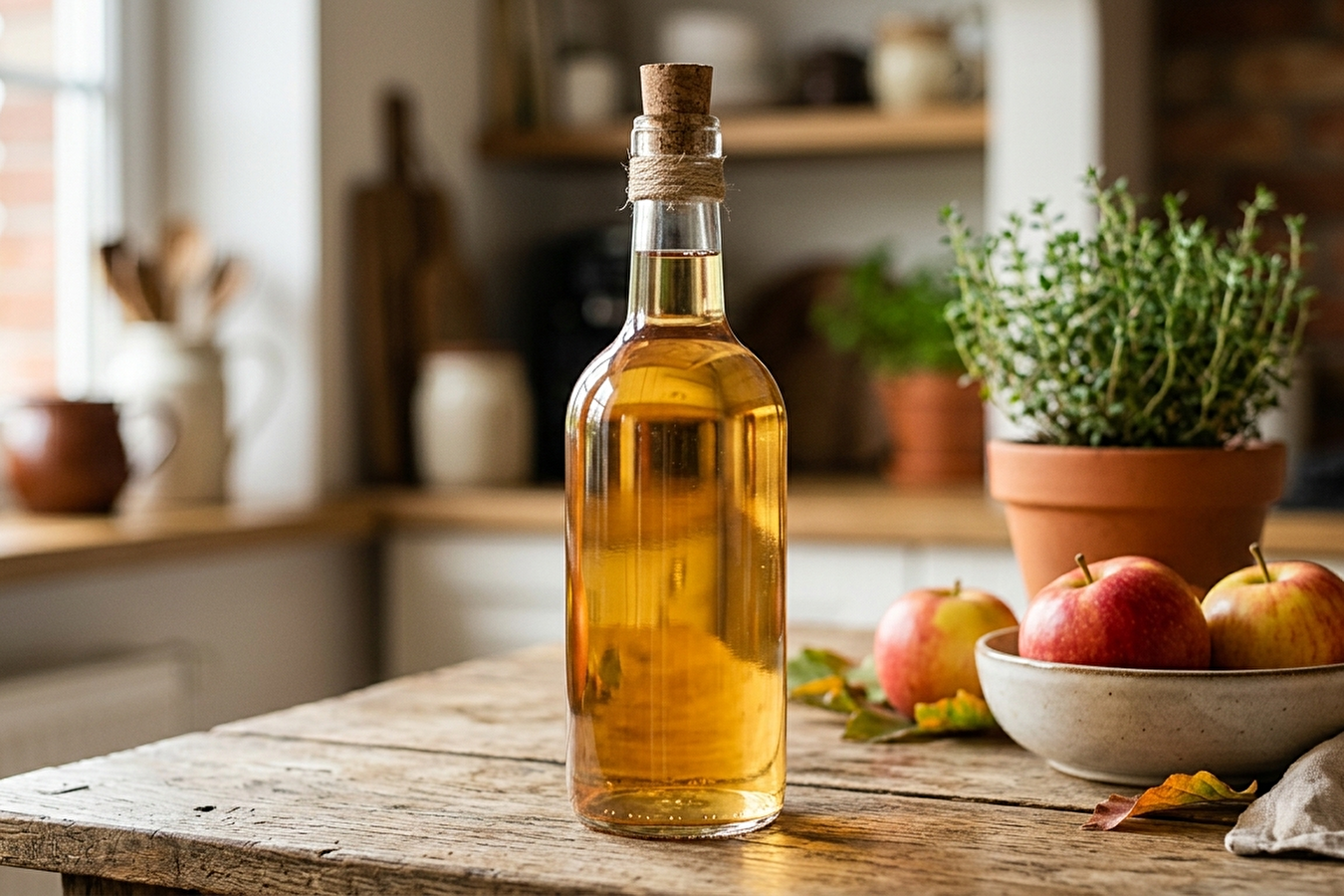
Wash the apples and cut them into quarters. Do not peel them (remove only the stems), as the skins contain the most beneficial bacteria and yeasts important for the fermentation process. That is why you can also prepare apple cider vinegar from just the peels left over from previously used fruit. Transfer the apples to a jar and cover with boiled, cooled water. Add honey (preferably dissolved in water beforehand). Stir everything, place a weight in the neck of the jar (this will keep the apples constantly below the surface of the liquid), then screw the jar closed and install an airlock. Leave to ferment for 2-3 weeks, stirring the mixture at least once a day. When the fruit browns, strain the liquid through a sieve and leave it in a warm place for another 3 weeks. When the liquid starts to smell like vinegar, this means the product is ready to consume.
Note: To ensure the process runs optimally, we recommend using a 3 L shatterproof pickling jar with an innovative, gasket-free, airtight lid (protecting the batch from mold and bacteria build-up) and an airlock included. It is also worth using a special weight with a strainer function (Ø 100), which will perfectly secure the contents.