Greek-style cheese
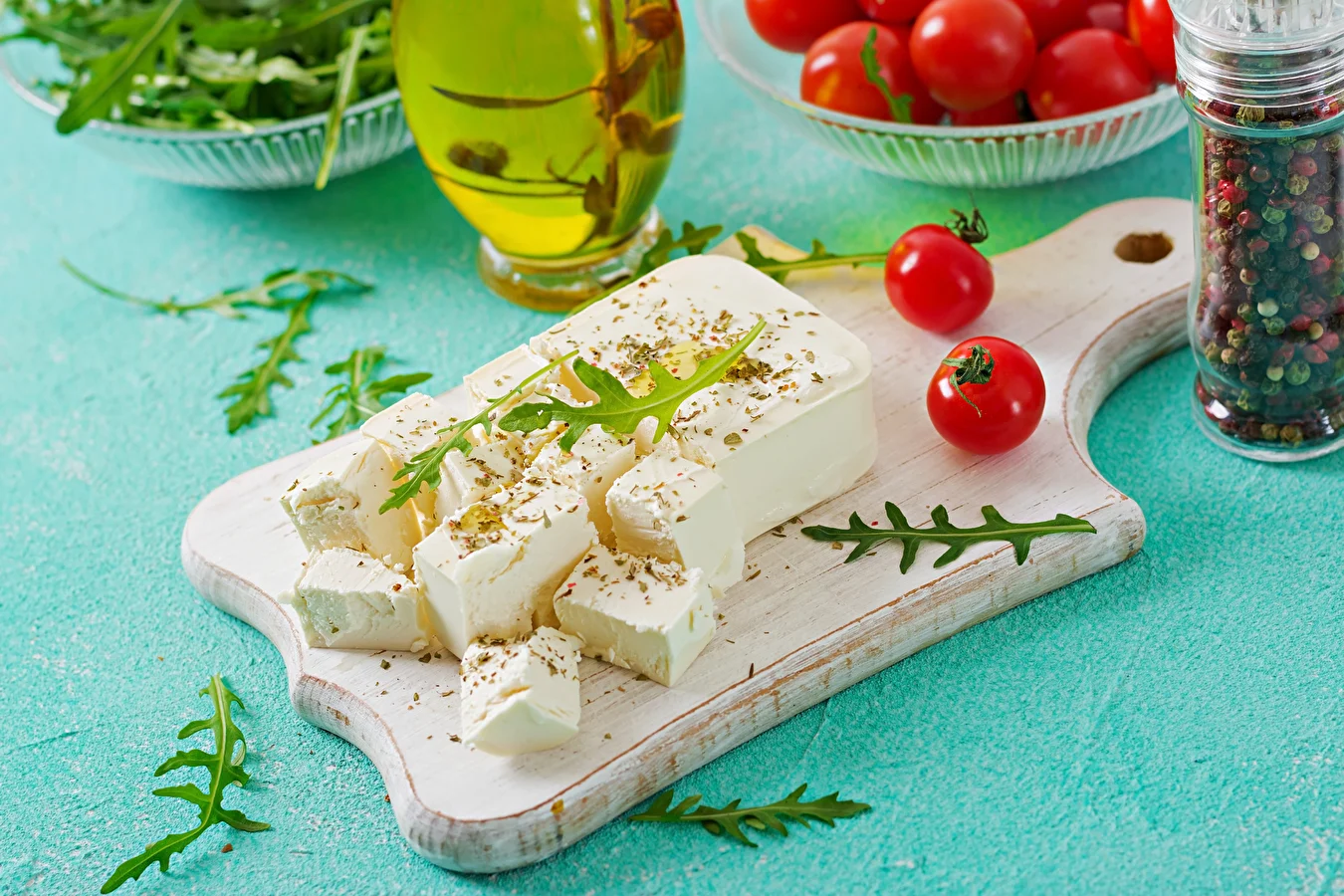
Greek-style cheese is associated with traditional Greek cuisine. It has a very distinctive salty taste and contains about 40% fat. Besides being a valuable source of calcium and vitamins, it is rich in natural probiotics that support immunity and the gut microbiota. Greek-style cheese can be served as a snack. It is also an ideal addition to salads. It tastes great with baked vegetables. We encourage you to try our recipe.
Notes
How to make Greek-style cheese?
Preparation:
Heat the milk to 32°C and add the starter cultures previously dissolved in a small amount of lukewarm water (approx. 30 ml). Stir and maintain at this temperature for 1 hour. Add calcium chloride dissolved in a small amount of water and, while stirring, heat to 38°C. Add rennet according to the recommended dose. If using dried rennet, also dissolve it in a small amount of water. Stir the milk with a few firm strokes. Do not stir for long, as the curd begins to form after about one minute. Turn off the heat (the forming curd will maintain the proper temperature). After 50 minutes, cut the curd into 1-2 cm cubes, stir gently, and let it rest for 20 minutes. Transfer the curd to a cheesecloth and hang to drain for 2 hours. Then transfer the cheese from the cloth to a cheese mold and press it gradually, increasing the weight from 1 kg to 4-5 kg to expel the whey from the cheese. When the weight is at the maximum level, leave the cheese at room temperature for at least 12 hours. After this time, prepare a brine from water or the collected whey and salt. Keep the cheese in the brine for 4-5 hours, refrigerating it.