Liquor and drinks
15 January 2019
Pale Ale Beer
4.0
(1)
Category:
Liquor and drinks
Difficulty:
Medium
Servings:
4
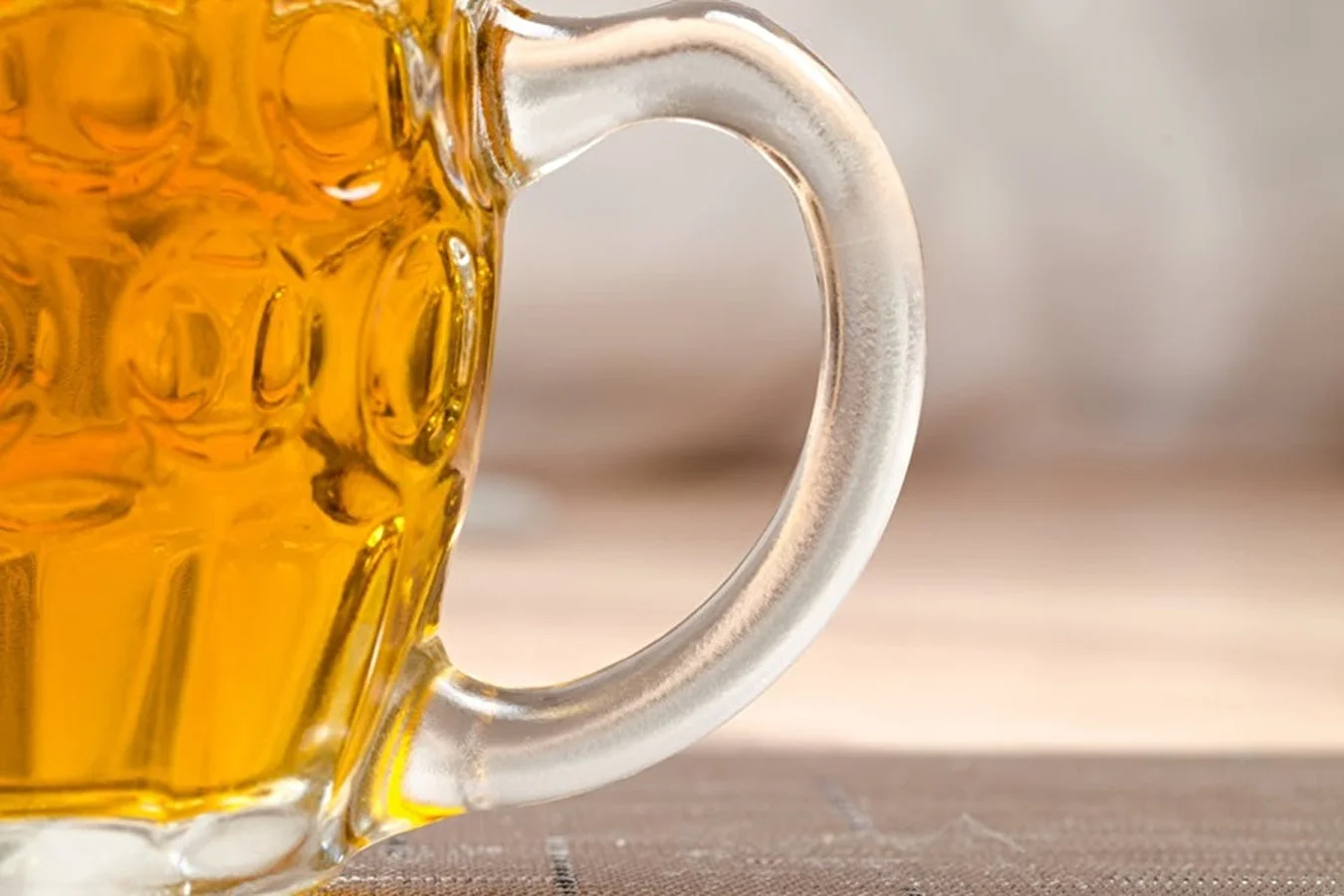
Pale Ale is a pale-amber, top-fermented beer with a moderately high, long-lasting yellow-white head. This drink is characterized by a strong hop aroma that results from dry hopping or adding American hop varieties at the end of the boil. The style originates from Great Britain and often has a citrus character. If you’re fans of this type of beer—with our recipe you’ll find that brewing a homemade drink isn’t difficult at all!
Notes
Recipe for Homemade Pale Ale Beer
Preparation:
Mill the malt to crush the grain and break the husks. You can order it already pre-crushed or crush it yourself using a professional grain mill. At home, you can also carry out this process with a coffee grinder. Pour 12 liters of water into a 40-liter kettle and heat it to 72°C. Then add the milled malt, stirring the mixture at the same time with a long plastic spoon to distribute the malt evenly in the water. The temperature should stabilize at about 62–65°C. At this temperature maintain the mash for about 30–40 minutes.
At the start of mashing, take a sample of the mash on a white plate—add a drop of iodine starch indicator—and check whether the starch in the malt
turns purple. Continue mashing until you obtain a so-called negative iodine test—i.e., no color change of the indicator. After 40 minutes, raise the temperature to 72°C and mash for another 30 minutes. In the meantime, check the degree of starch conversion. (If the indicator still turns purple, extend the mash.) Then raise the temperature to 78°C and hold this level for another 10 minutes. Thanks to the temperature steps, the starch will convert faster, the mash will be less sticky, and it will clarify more easily. The iodine starch indicator should no longer change color (turn purple). At that point, you can consider mashing finished. The next stage is wort filtration. Carefully transfer the mash to a 30 L filtering vessel. Wait for the so-called filter bed to form. Then filter the mash. To separate the spent grain from the wort, it’s best to use a stainless-steel braid filter installed in the vessel. Return the first few liters back to the vessel and repeat the process until you obtain a clear liquid. If most of the wort has been filtered, the spent grain should be sparged, i.e., rinsed with water at about 80°C to wash out the sugars remaining after mashing. Perform sparging with about 10–12 liters of water. The excess water will evaporate during hopping. Return the clear wort to the kettle. In the meantime, take a sample to measure the sugar content with a hydrometer. It will show the gravity of our product, i.e., the sugar content in °Blg present in the wort. The best level is about 12–15 °Blg.
Hopping the wort – 60 minutes
Hopping the wort is the next step in beer production. Place everything in the kettle and bring it to a boil. Then add the Perle hops, taking care to add them slowly so the boil doesn’t foam over. Cover the kettle, leaving access to air so steam can escape. After 45 minutes, add the aroma hops—Citra. Citra hops have a wonderful citrus fruit aroma—they can also be used for dry hopping the wort. If you want the beer to have deeper citrus aromas, you can also add orange peel during hopping (do not add the white pith). After 15 minutes (the process takes about 60 minutes in total), hopping is finished. To avoid putting the hops directly into the wort, you can use a hop bag and place the hops in it. If you boil the hops directly in the wort, after hopping you should strain them out, separating them from the wort through a sieve/cheesecloth or a stainless-steel braid filter. All the hops should ultimately be separated from the wort. After this step, stir the wort vigorously to properly aerate it. Cool the clear wort as quickly as possible—we recommend using an immersion chiller. In the meantime, prepare the yeast. Place the contents of the sachet in water at about 25°C and leave for about 20–30 minutes to rehydrate the yeast. When the wort has cooled to 21°C, add the yeast. Seal the fermenter and fit an airlock half-filled with water. Carry out fermentation at about 18–21°C for 7–10 days. After primary (vigorous) fermentation, rack the young beer and begin secondary (conditioning) fermentation. Its purpose is to clarify and mature the beer. Siphon the liquid off the yeast cake using tubing into a second fermenter. The tubing should be properly submerged in the beer to avoid aeration and infection. After racking, seal the vessel and leave it for another 7 days at the same temperature. During secondary fermentation, you no longer need to use an airlock. At this time, take a sample of the beer. The hydrometer should read from 2 to 4°Blg, which means that primary fermentation has finished. After a week, bottle the beer. To do this, add about 6 grams of glucose per liter so the beer is nicely carbonated. Thoroughly wash and sanitize each bottle and the caps using potassium metabisulfite. Dissolve the sugar in a small amount of water and add it to the entire batch. For 20 liters of beer you need about 150 grams of glucose. You can add the sugar in the correct amount using a sugar measure directly into each bottle: 3 grams per every 0.5 liter of beer. Close the bottles using a capper. After about 4 weeks, the beer should be well carbonated. In practice, the beer’s conditioning time depends on its style. It’s therefore recommended to taste one bottle from time to time and check when the beer starts to taste best.
NOTE! All equipment should be properly sanitized and cleaned. For this purpose, use potassium metabisulfite according to the instructions
on the package.
Enjoy! ...because homemade is better!