Healthy fermented foods are preserves that we can make practically all year round. After all, not only the most popular and well-known cucumbers and cabbage can be fermented. We can ferment practically all vegetables, as well as fruit. It all depends on our preferences. For those who prefer spicy flavors, kimchi is an interesting idea. A Korean side dish that includes napa cabbage and other vegetables fermented with chili gochugaru. Kimchi can also be added to ramen soup.
Check out our kimchi recipe suggestion. We also encourage you to experiment and create your own recipe.
Preparation:
Cut the napa cabbage lengthwise into 4 parts, then crosswise into pieces about 4–5 cm. Place the chopped cabbage in a bowl, add two handfuls of salt, and cover with water. Press the cabbage down with a small plate and set aside for a few hours to release its juices. Mix the water with the rice flour and sugar. Bring to a boil in a saucepan and cook until you obtain a thick rice slurry. Then remove from the heat and set aside to cool. In the meantime, finely chop the garlic and grate the ginger.
When the slurry has cooled, add the garlic and ginger, as well as the chili and soy sauce. Mix until smooth. You will then use this paste to rub into the vegetables.
Cut the carrot and kohlrabi into matchsticks, the onion into thin slices, and the spring onion into strips about 5 cm long.
After soaking, rinse the cabbage, then drain and squeeze out the water very thoroughly. Transfer to a bowl, add the remaining vegetables, and rub with the prepared paste. It’s a good idea to wear gloves to avoid later trouble washing your hands and the burning caused by the chili.
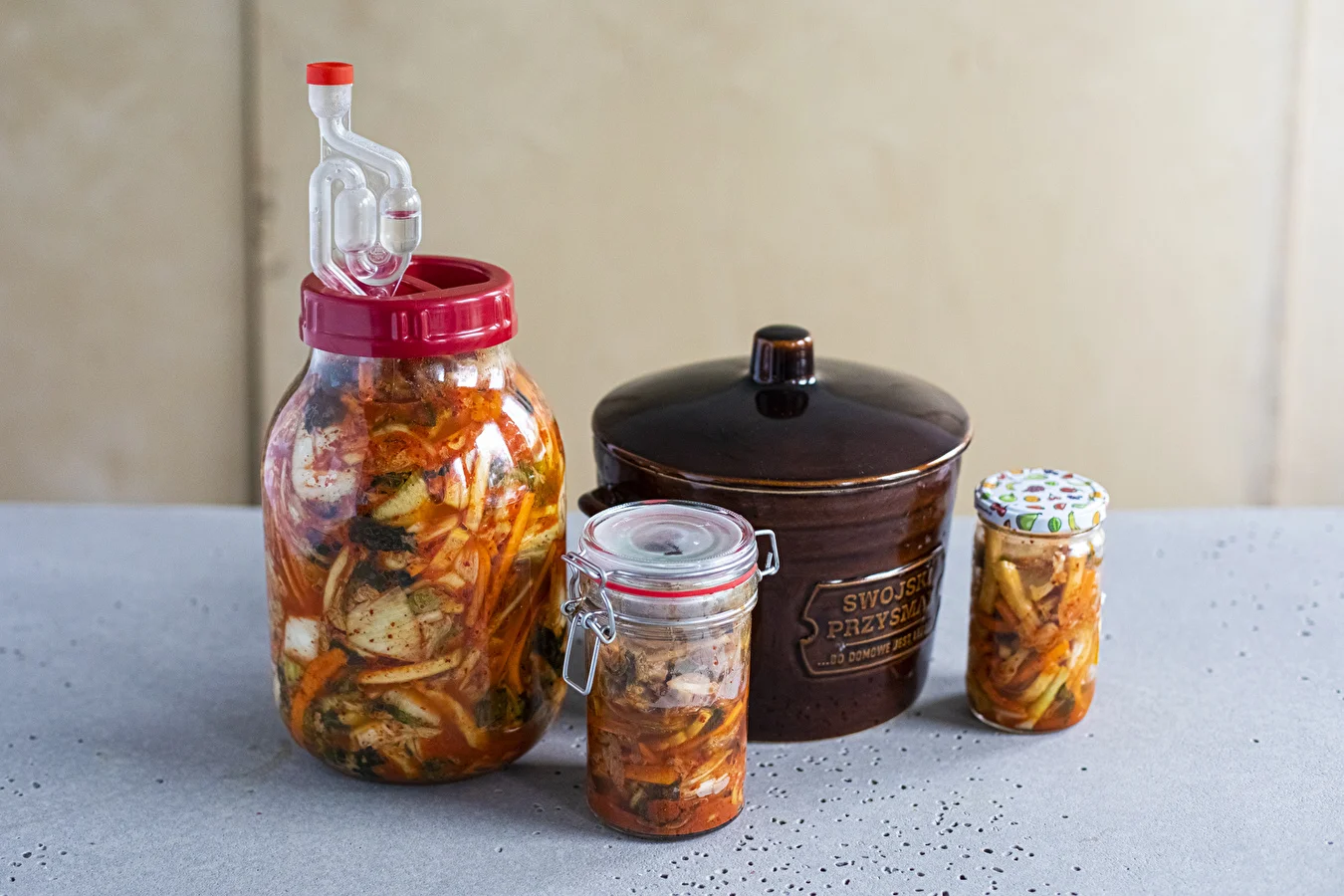
Transfer the vegetables coated with the paste to a clean jar or stoneware crock, packing them tightly to eliminate air bubbles. When using a stoneware crock, it’s best to weigh the fermenting vegetables down, e.g., with a weighted plate or a boiled/sterilized stone, so that they stay below the liquid’s surface. If you’re using a fermentation jar, remember not to pack the vegetables right up to the lid, but leave a bit of free space. The gases released during fermentation will lift the vegetables upward. It’s a good idea to weigh them down so the rising contents don’t cause the liquid to overflow through the fermentation tube. Fill the fermentation tube halfway with water.
Ferment the kimchi for 2 to 5 days. Starting on day two, it’s worth tasting it daily to check whether the flavor already suits you. Over time, the kimchi will become increasingly sour and the vegetables will soften.
You can transfer the finished kimchi to smaller jars and store it sealed in the refrigerator.
Enjoy! ...because homemade is better!
fermented foods
stoneware
fermented vegetables
spicy preserves
kimchi recipe
vegan dish