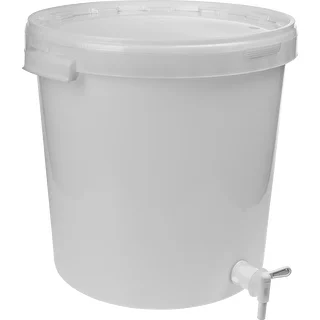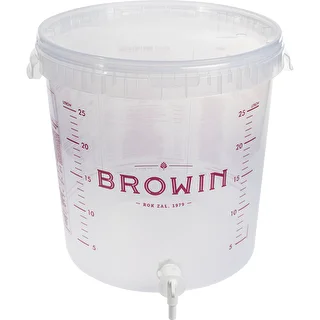
30 L fermentation vessel now in an exceptional expanded set! With the additional components, preparing your favourite homemade drinks is even easier and more convenient. Take advantage of this offer today!
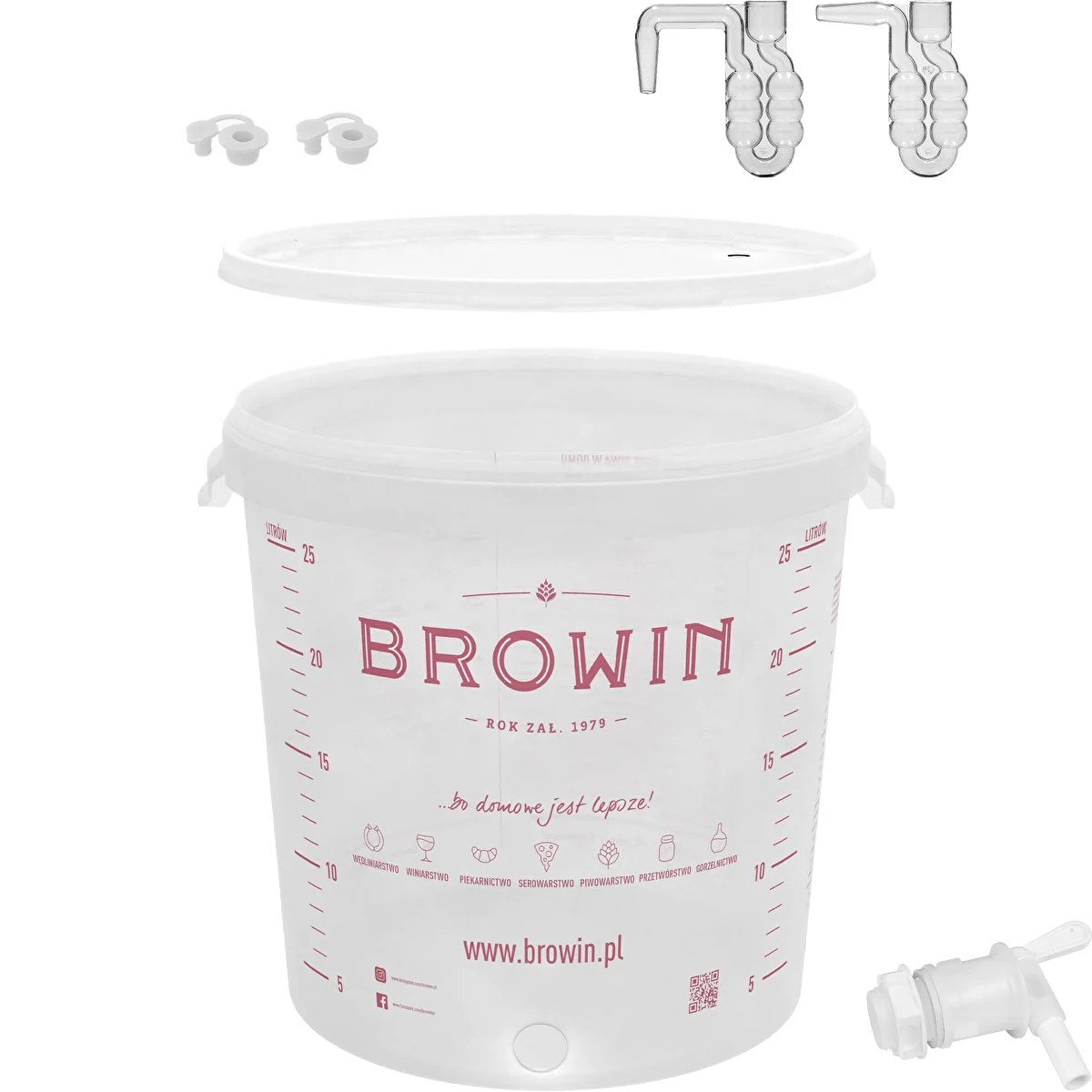
- EXPANDED SET - 30 L fermentation vessel with lid, drain tap, 2 fermentation bungs with stoppers, and 2 shatterproof airlocks - side and horizontal.
- Practical and versatile - the set includes a large-capacity vessel (30 L), suitable for fermenting beer, wine and sugar washes.
- High quality - a durable vessel that will not deform and is resistant to discolouration, supplied with a practical tap, durable bungs and fermentation airlocks.
- Versatile design - the vessel's wide lid has an opening for a fermentation airlock. You can make an additional opening below the collar yourself, allowing you to fit an angled airlock and ferment in several vessels at the same time, stacked one on top of another.
- Easy transfer of your drinks - the rotating drain tap allows you to conveniently drain all the liquid from above the sediment.
- Convenient scale - the printed capacity scale on the vessel lets you monitor the volume of your fermenting batch, while useful tips make it easier to prepare homemade specialities.
You can also use the entire set to make home-fermented vegetables.
The fermentation vessel has PZH certification approving it for contact with food. Made from polypropylene and BPA-free.
The expanded set now includes: the vessel, two fermentation bungs with stoppers, a drain tap and two shatterproof airlocks: side and horizontal.
With this practical, complete set, you can easily prepare your favourite homemade drinks and, when needed, fermented vegetables as well. The 30 L vessel is made from milky plastic designed for contact with food. It is highly durable, suitably flexible and resistant to discolouration caused by contact with tannins from fruit.
The airlock allows carbon dioxide (CO2) to escape in a controlled manner during fermentation, effectively protecting the fermenting batch from oxygen, fruit flies, other insects and bacteria.
Self-modification by making a side opening in the vessel allows you to fit an angled airlock and, for example, ferment in several vessels positioned one on top of another at the same time.
Note: if it is difficult to monitor the water level in the airlock, you can fill it with a less-volatile oily liquid.
The rotating drain tap allows you to drain all the beer, wine or other fermenting batches from above the sediment. The tap is positioned so that it does not prevent you from placing the vessel on various flat surfaces.
Lid also available separately – if the lid is damaged or lost, you can purchase it as a replacement part without having to buy a new vessel. Matching lid: 340431.
Using the vessel:
To make the vessel easier to open, lift the lid slightly by gently pulling on the handle, insert a spoon handle into the gap, then run it around the rim of the vessel. Do not clean the vessel with abrasive scourers, as they may scratch the surface and create places where contamination can develop.
NOTE: You can improve the seal by coating the rim of the vessel with petroleum jelly or edible oil. Before preparing a fermenting batch, thoroughly sanitise the fermentation vessel with potassium metabisulfite.
Maximum permitted temperature of the contents: 85°C
Temperature of the vessel before filling should be: minimum 5°C
- Maximum alcohol content of the contents: 50%
Storage with protection from UV radiation
To prevent damage caused by UV radiation, empty or filled vessels must not be stored outdoors. If this is not possible due to storage conditions, the vessels and lids must be stored in a way that protects them from UV radiation. For example, pallets containing vessels and lids can be additionally covered with a plastic tarpaulin resistant to UV radiation.
Storage of empty vessels
Because the vessels and lids are sensitive to weather conditions, they should be stored in a dry place at a constant temperature. This not only protects them from moisture but also effectively prevents condensation, which can damage packaging decorated with offset printing, IML or digital printing. In addition, despite the use of an antistatic agent, contamination with dust or dirt cannot be ruled out, so the vessels must be stored in a clean room.