How to prepare white asparagus?
Low in calories, easy to digest, rich in valuable nutrients, and delicious—that’s asparagus, whose season unfortunately lasts very briefly, only a few weeks. So don’t waste time! Find out how to prepare perfect asparagus to enjoy 100% of their exceptional flavor and other benefits. You’ll find tips on preparing green asparagus in this post: How to prepare green asparagus? — today we’ll focus on white asparagus. How do they differ from green, what do they taste like, and what can you do to turn them into a true treat for the palate? Read on!
Notes
What’s the difference between white and green asparagus?
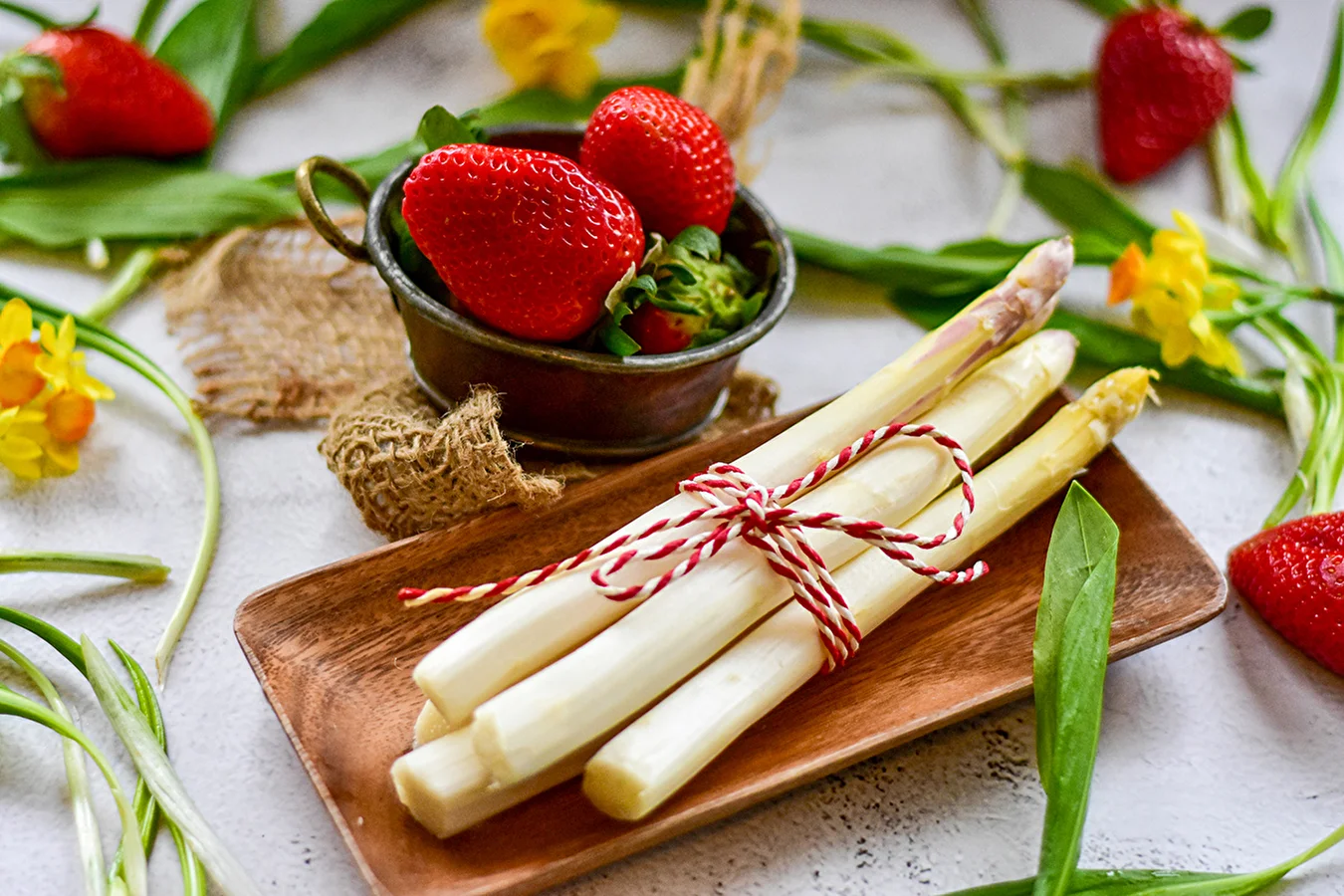
White and green asparagus differ primarily in the way they are cultivated, that is, in their growing conditions. White asparagus grow underground—whenever their shoots start to reach the surface, they are covered with soil or film so that sunlight does not reach them. As a result, the asparagus do not produce chlorophyll and remain white until harvest. Green asparagus, on the other hand, are exposed to the sun. How do these cultivation differences affect the flavor of asparagus? White ones are more delicate, slightly sweet, often with a hint of bitterness. Green asparagus are the very essence of the flavor of fresh spring produce. They also differ in appearance—not only in color. White asparagus are usually thicker than green and should be trimmed at about two-thirds of their length. Note! Remember that the tough snapped-off pieces can still be used, for example to cook asparagus soup. The thickness of white spears also affects their cooking time. We cook green ones for about 2–3 minutes, while white may need up to 12 minutes! The last important difference between these two types of asparagus is their preparation method. White asparagus must be peeled—their skin is fibrous—whereas green asparagus can be eaten without peeling. Store both types in the refrigerator until you cook them—ideally upright, with the ends placed in a glass / jar filled with water.
How to choose the right asparagus?
When buying, pay attention to their condition—tight tips and moist ends guarantee firm, springy spears. White asparagus should be neither too thick nor too thin. When you squeeze the ends, sap should ooze out, which indicates freshness. You can also test freshness by rubbing the ends of two spears together—if they squeak characteristically, they deserve a spot in your basket.
How to freeze asparagus?
Want to enjoy asparagus longer and extend the “asparagus” season? It’s possible! You can freeze asparagus after peeling them. You can also freeze the snapped-off ends. Once you’ve accumulated enough, they’ll make a great base for vegetable stock or a cream soup. Frozen asparagus are easy to prepare: drop them straight into boiling water, without defrosting or blanching.
How to prepare white asparagus?
White asparagus need peeling, so after washing them and snapping off the woody ends, remove the skin with a peeler. A special asparagus pot is perfect for cooking them—narrow and tall, and equipped with a convenient basket that lets you cook the spears upright and then drain them easily. Add salt and a pinch of sugar to the water to counteract any bitterness. Make sure the water covers the entire length; do not leave the tips above the water surface (as is often done with green). Cook for about 10–12 minutes, until tender. Serve with vinaigrette, horseradish, or avocado. White asparagus also pair wonderfully with peanut butter and soy sauce. You can also steam white asparagus—just extend the cooking time by about 3–4 minutes.
How to roast white asparagus?
Baking, pan-frying, or grilling white asparagus works great, especially if they’re no longer at peak freshness. Prepared this way, they have a more pronounced flavor. Preheat the oven to 200 degrees, wash and peel the asparagus, and snap off the hardened ends. Then rub them lightly with olive oil and sprinkle with salt. Arrange on a baking sheet or in an ovenproof dish and bake for about 10–12 minutes. Roasted asparagus taste best served with dill or parsley, lemon juice, and nuts.
How to reheat asparagus?
Asparagus tastes great reheated, too—simply sauté in a pan, warm them up over steam, or heat in a pot with hot water, adding a teaspoon of butter!