Liquor and drinks
9 January 2019
Rose cider
3.0
(1)
Category:
Liquor and drinks
Difficulty:
Medium
Servings:
4
Cider has made a comeback and for several years now you can taste it more and more often in Poland as well. Contrary to the common belief, cider does not have to be made only from apples. As proof — we present a rose cider recipe that you can easily make yourself in the comfort of your home. If you're interested, check out our recipe.
Notes
Rose cider recipe
Preparation:
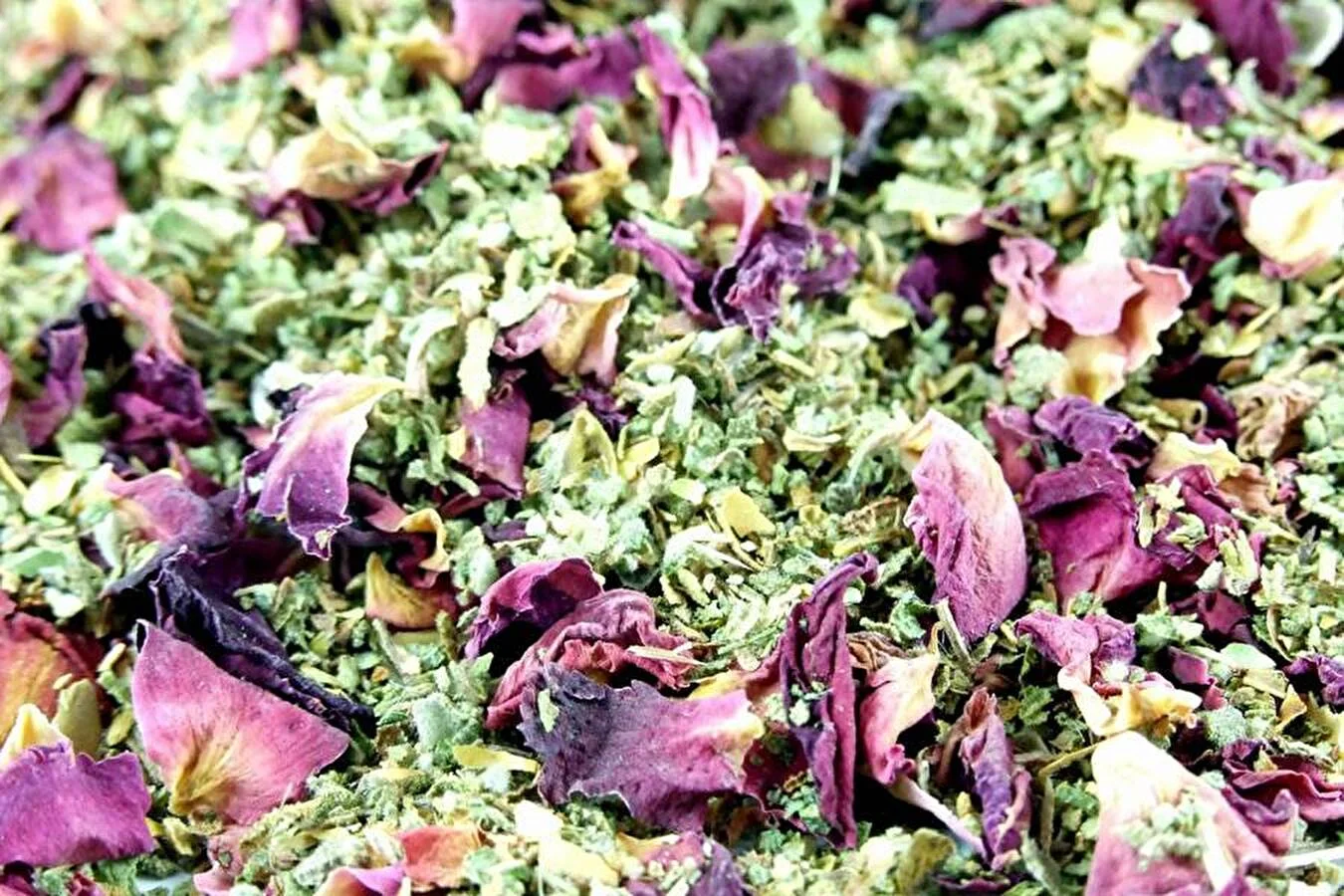
Pour 2 liters of hot water over the flowers to achieve the best extraction. After 24 hours, pour the resulting infusion (liquid only) into a demijohn of at least 10 L, then make a sugar syrup. Boil 0.8 kg of sugar with 3 L of water, skimming off the foam that forms on the surface, then cool and pour it into the demijohn with the infusion. Top up with the remaining water. Add Sweet cider yeast, yeast nutrient, and 0.75 of a pack of acidity regulator to the prepared mixture. Close the demijohn with a stopper and a water-filled airlock, and leave it to ferment for about 14 days. After this time, rack the still-fermenting must off the lees* (you can also strain it through cheesecloth folded in half or a filter bag). Next, prepare suitable 0.5 L bottles, e.g., beer bottles with matching caps, or screw-cap PET bottles – all of them must be pressure-resistant because CO2 will build up in them.
Bottle the drink**, adding two teaspoons of sugar (approx. 8 g) per liter. Cap the bottles tightly and leave at room temperature for 2–3 days to carbonate. After that, move them to a cool place (below 13°C) or to the refrigerator. We recommend drinking the prepared Ciderini within 10–15 days – it tastes best then, especially when properly chilled.
* At racking off the lees, you can adjust the taste by acidifying it or, if fermentation has fully completed, by sweetening.
** Before bottling, check – using a hydrometer – the sugar content of the fermenting must. If it is below 3 Blg, sweeten according to the recipe. If it is
above 4 Blg, reduce the amount of sugar to 7 g; above 5 Blg – to 6 g; and at higher Blg values, reduce the sugar accordingly.
If the Ciderini is not sweet enough, instead of increasing the amount of fermentable sugar (which could cause excessive CO2 build-up and damage the bottles), you can
sweeten it in the bottles using xylitol – a sweetener that does not leave an unpleasant aftertaste.
Enjoy! ...because homemade is better!