
Search results for "prezent"
Recipes

Meat and cold cuts
Homemade baked ham with herbs
We present a quick and simple recipe for a perfectly tender and juicy homemade baked ham with herbs. Curious how to make it? We're here to help!

Dishes
Cream of Pear and Parsley Root Soup
BROWIN experts present an idea for an unusual dinner - a recipe for pear soup. Discover the flavors of pear and parsley root wrapped in a delicate cream soup!
Traditional Recipes
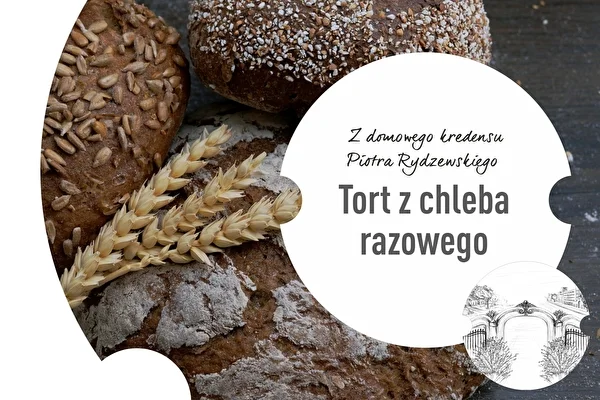
Episode 1: Wholemeal Bread Cake
We are launching a special series in which we will present culinary stories …from the kitchen – in a very concrete sense, namely, we will peek into the home pantry of an exceptional family in which, for at least a century and a half, recipes for various delicacies were written down and preserved. In the history of this family, as in a mirror, the history of Poland is reflected. This is the story of people who themselves also made history… We warmly thank Mr. Piotr Rydzewski for making available materials from the family archive – among them are unique photographs and documents, as well as older and newer recipes written by hand. Some of them date back to a time when the beautiful art of calligraphy was still practiced every day. We warmly encourage you to read the articles and also to try at least some of the recipes that will appear here, as many of them can successfully be used today as well, which we have tested ourselves with delicious results. Some ingredients or their quantities may seem a bit surprising today and pose quite a challenge to the imagination, but adapting them to your own possibilities and needs can be a fascinating adventure. We encourage you all the more because we ourselves always reach for the treasures of the past with pleasure and enthusiastically look among them for inspiration attractive to seekers of the exquisite taste of homemade dishes. Let this be an opportunity to take a creative look at our wonderful culinary tradition, and at the same time a meeting with a touch of fascinating history, recorded in words and images over several generations. In the next installments of our series, we will look at the first of the two main branches of Mr. Piotr's family tree – the Kuźnicki family. Most of the recipes we will present were written down and preserved for posterity by Aleksandra Kuźnicka, née Lipska. [[img:foto1_ogolne.jpg]] © Piotr Rydzewski / photo: BROWIN

Traditional Recipes
Episode 3: Beef tenderloin roast and pan-fried tenderloin
We warmly invite you to read the third installment of our special series, in which we present a family story not so much “from the kitchen” as in connection with culinary tradition—with old and somewhat newer recipes. In this story, good taste plays an important role—literally, because the people mentioned here were united not only by family ties, ideals, a sense of mission or a work ethic, but also by the home table and the meals eaten at it—both everyday and exceptional. And since our thoughts are already circling around the upcoming Christmas holidays, a truly festive flavor will accompany us in this episode. Thanks to the courtesy of Mr. Piotr Rydzewski, let us once again look into his extremely interesting family archive. So, as usual—first a few sentences of story and unique photographs, and then the culinary part… We encourage you, dear Readers—try using the given recipes at home, adapting them not only to today’s possibilities but also to your own preferences. Creating dishes with wonderful flavor is the best way to create a unique atmosphere, so needed especially during the Christmas and New Year season. In the previous episode we recalled, among others, the figure of Antoni Kuźnicki—a railway official of the Kalisz district and Mr. Piotr’s great-grandfather. Mr. Antoni played a significant and noble role in the history of the railways—at a time extremely important for Poland. Here is an exceptional document, issued on November 11, 1918. We all know this date as one of the most important days in our history—the day of regaining independence. [[img:skan_20080416130_do-cz.3.jpg]] © Piotr Rydzewski This letter, marked with the stamp of the Union of Railwaymen of the Łódź Junction, as well as the exact time (10 p.m.) and signed by members of the railway administration, obliges Mr. Antoni, a traffic department clerk, working at 21 Składowa Street, to “upon receipt of this order immediately proceed to take over from the Germans the Łódź Kaliska station and staff with Polish railway personnel all stations and posts up to Szczypiorno” [Szczypiorno is today a housing estate that is part of Kalisz]. When traveling by train today, especially in the Łódź region, it is worth remembering people like Antoni Kuźnicki, thanks to whom independence arrived in many places by rail—literally, along with the whistle of the locomotive and Polish railwaymen. And now the recipes—this time two hearty meat dishes that can be an excellent proposal for holiday dinners. Starring—the tenderloin! In the recipes we generally keep the original spelling, introducing only the necessary linguistic and editorial changes.
Meat and cold cuts
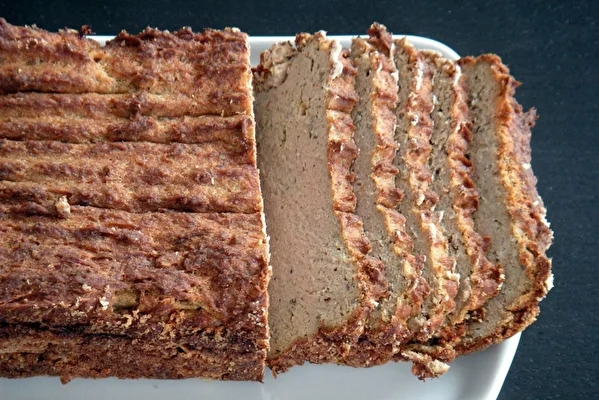
Homemade pâté with mushrooms
Looking for an idea for a holiday dish? Want to learn how to make homemade pâté with mushrooms? We present a tried-and-tested recipe and advise which mistakes to avoid!

How to make it?
How to make wine step by step?
Want to make homemade wine? Wondering how to start producing wine at home? Looking for a guide where the winemaking process is presented step by step? You’ve come to the right place!

Fish
Carp in a Roman pot
Carp isn’t just those distinctive steaks, breaded and pan-fried or prepared in vegetable aspic. This fish, rich in vitamins A, B1, B2, B3, B6, B12, D and K, as well as phosphorus, omega-3 fatty acids and protein, is a great base for many different dishes. Traditionally, carp is associated with the Christmas Eve supper, but it’s worth discovering that it tastes excellent not only in the typical holiday version. Today we present one of our experts’ ideas - a recipe for aromatic carp prepared in a Roman pot! If anyone thought such a pot could only be used for baking crusty bread or making stew, they’ll be pleasantly surprised. Roman pots are extremely versatile - and in the company of carp they get to feel like ...a fish in water;) See for yourself - let the carp speak with its full flavor!

Traditional Recipes
Episode 4: Carp, Polish style; bream or carp in a fluffy sauce
Christmas Eve and Christmas are fast approaching, so it’s the perfect time to suggest something delicious with carp in the leading role. And for everyone who for various reasons isn’t fond of carp or would like to taste another fish as well, we have a recipe for bream. In the next installment of our series we once again present recipes written down over several generations and kept in the family sideboard of Mr. Piotr Rydzewski. Many of these handwritten recipes (especially the oldest) are a real challenge for anyone trying to read and test them, but the effort always pays off – it’s worth diving into the richly varied world of dishes that appeared on our parents’, grandparents’ and great-grandparents’ tables. These notes sometimes have “blank spots” – not all include the exact composition or quantities of ingredients, and some omit steps that today are no longer always obvious. But that’s what culinary intuition, inventiveness and imagination are for! You can fill the gaps with your own ideas, use the experience you already have, and treat ambiguities as a touch of mystery – the seasoning of this tasty adventure. So perhaps this time we will inspire you, dear Gourmets, to prepare your own version of a holiday carp or bream… Thanks to Mr. Piotr’s kindness, let’s once again look not only into the culinary notes but, as always, also into his unique album. To begin with, a bit of history that speaks very vividly through archival family photographs. We dedicate the photos below above all to those who often make long flights to spend Christmas and the New Year with their loved ones, especially here, in Poland, where, as we know, this time is the most beautiful, the tastiest and the most heartwarming. Here are unique photos taken in the 1930s at Łódź’s Lublinek airport. [[img:skan_20080416190_lublinek-1934.jpg]] © Piotr Rydzewski Photograph taken during the christening ceremony of two airplanes – Lublinek, May 1934 [[img:skan_20080416201_lublinek-1937.jpg]] © Piotr Rydzewski Lublinek Airport – 1937
Blog

Tannins - the magic ingredients of wine
Tannins from a group of organic compounds that are naturally synthesized by plants. We find them in wine thanks to the raw materials used for producing this drink – grapes and other fruit. They are also present in stems, and even in tree bark. We can find them on labels of certain products under the symbol E181. The main function of tannins is the protection of plants – the characteristic bitterness of tannins effectively discourages animals from tasting any tannin-flavoured “meals”. During studies of the impact of tannins on plants it was also found that they have antiseptic properties, thanks to which they provide good protection against fungi and insects.

A bit of culture(s) in preparation of processed meat
As we all know, homemade is always better since homemade products are prepared with out own flavour preferences in mind and without the unnecessary chemical additives. In the case of homemade processed meat what becomes important is the question of how long is their shelf life if we limit the ingredients to the indispensable minimum? Some of you might be surprised, but without that long list of preservatives applied in the industry the processed meat will have a longer shelf life and be safer for health! It will be suitable for aging on the refrigerator shelves, remaining fresh for even a few months, with nothing more than ripening and slow drying happening to them, with both these processes being completely natural and even desirable to many gourmets. Dried meat is suitable for use even when it is already hard to cut – it can always be grated and used for sprinkling a homemade casserole, for example (whoever has not tried that yet should see for themselves - it is delicious!). When practicing meat processing within our own kitchen, we usually prepare sausages, hams, loins, gammons, sirloins, etc. traditionally by subjecting them initially to curing (either wet or dry) or marinading, and then to smoking, scalding or roasting. I suggest improving, enriching and diversifying this repertoire – by trying something new, which also very easy and ensures extraordinary effects. Some initiative and knowledge are the only things necessary in order to make the first step... and start preparing your own, delicious, ripened processed meat.

Brine pickled vegetables and more – what is worth knowing about brine pickling?
Fermentation, defined by biologists as anaerobic production of energy from nutrients, has found extensive application in alcohol production, food preservation, and changing the organoleptic properties of products - their flavour, consistency, colour, or aroma. The history of using this process dates back to ancient times. At first, fermentation was only used for storing food and was carried out with deeper understanding of microbiological mechanisms. Next alcoholic fermentation, brine pickling is one of the most popular fermentation processes. In Poland, at first the only brine pickled vegetable was cabbage, which used to be eaten in quite large amounts, especially at the countryside an in poor household where getting through the winter depends on the quantity of crops and preparing them in such a way as to be able to take advantage of them for a long time.

Healthy diet affordable for all. New Year, new opportunities.
Do you have any resolutions for 2025? Most likely, yes… And if you want to do something good for yourself and your loved ones, one of these resolutions should be: This year, I will take care to eat healthily – and ensure my family benefits from it, too! To help you achieve your goals, we’ve prepared this short article – it’s sure to be a useful read, and you can return to it whenever old eating habits try to reclaim their place in your life. The New Year is a perfect time to reflect on your eating habits and set new goals toward a healthy change in this area. However, diet alone is not enough. One of the most effective ways to implement positive changes is to use innovative kitchen tools that not only make it easier to prepare healthy meals but also help preserve valuable nutrients. So, if you want healthy cooking to be less time-consuming and exhausting – and instead a pleasant and, most importantly, lasting experience – Browin has some ideal products for you. With their help, your New Year’s resolution will result in long-term beneficial changes to your eating habits. Let’s explore a few products that can become key elements in your kitchen and inspire you to embark on a fascinating journey through the world of flavors, aromas, and valuable nutrients:

Beat the Inflation - Make Your Own Dairy
Dairy is a staple in the daily diet for many of us. According to the principles of healthy eating, we should reach for yoghurt, kefir or other fermented dairy products first and foremost every day. Yellow cheese contains plenty of calcium (although some plant-based products are not inferior in this regard), and skyr yoghurt, whey or white skim cheese have plenty of protein. We usually reach for various forms of dairy products up to several times a day, so it's worth considering making them at home and having a say in what ends up on our plates.

Baker’s yeast - application in the garden
Baker’s yeast is a commonly used culinary microorganism, namely single-cell fungi. It is them who are responsible for the rising of dough for bread, pizza, steamed dumplings or the popular yeast cake. They are used in hundreds - if not thousands - of ways in the kitchen. This leads to obtaining delicious products that delight our palates on a daily basis. You can find many recipes for yeast-based delicacies in our Recipe Book, but that is not the end of applications of yeast.