€8.97




Preserves
Sauerkraut is a natural probiotic that naturally strengthens our immunity, which is especially important in times of coronavirus infections. Check out our recipe for delicious young sauerkraut
Preserves
Homemade sauerkraut is a source of many vitamins. Eating it during colds and colder days helps boost your immunity. Sauerkraut is also a great snack for those watching their figure. Here is a tried-and-tested, step-by-step recipe for homemade sauerkraut!
Liquor and drinks
Water kefir – a simple recipe for a refreshing lactose-free drink
Liquor and drinks
Autumn is still the perfect time to stock your home cellar with excellent wines of your own making. Try our recipe for rowanberry wine.
Preserves
Try this recipe for a spicy Korean dish made with fermented vegetables. If you like spicy food, you will definitely enjoy apple kimchi!
How to make it?
If you’re a wine lover, we recommend trying to make it yourself. Homemade wine tastes exquisite and, besides the alcohol content, brings invaluable satisfaction.
Preserves
Half-sour cucumbers are an intermediate stage of fermentation. They are crunchy, tasty, and healthy. Find out how quickly you can prepare them with dry brining.
Cakes and breads
Recipe for perfect pizza dough on a gas grill with a long, 48-hour cold fermentation. Crispy edges, a lightly aerated center, and a simple ingredients list. Try this Italian classic on your own grill!
Traditional Recipes
Family culinary recipes are a treasure passed down from generation to generation. The fermentation process has been known for centuries, so in this field it is worth reaching back to the sources. We recommend a recipe with a history.
Liquor and drinks
How to make homemade mirabelle or cherry plum wine? Discover a proven recipe, ingredient ratios, and the step-by-step stages of fermentation.
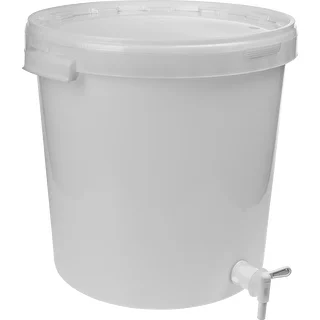
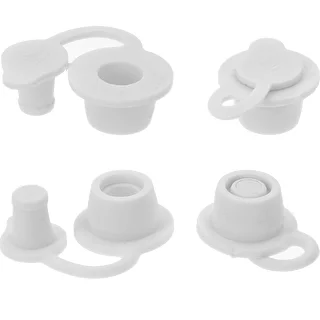
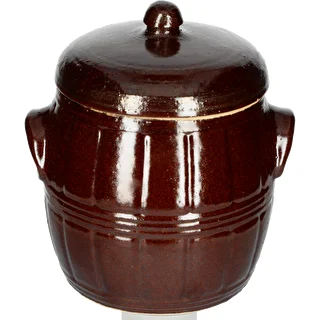
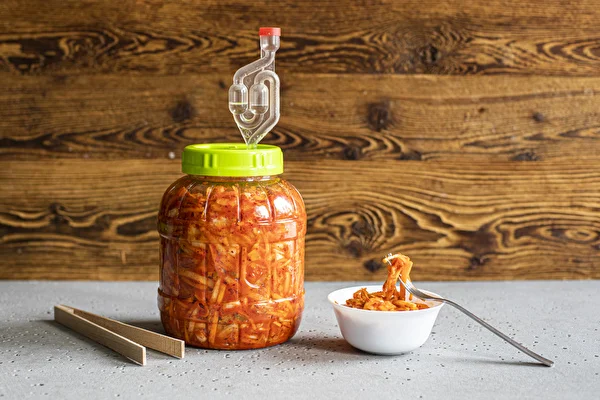
Fermenter has two side capacity scale printed and valuable tips for preparing home made wine, beer or sausages. Description 1.Fermenter is closed with wide, plastic cover with mouth used to install fermentative straw. 2.You can also assemble an angle straw after drilling the mouth on the side of fermenter. In every set there are 2 corks, one with the hole,the other one with blind stopper.
Making preserves is rooted in our history since the Middle Ages. A properly performed process of food preservation enables stopping the physiological, biochemical, and microbiological processes that take place in tissues. At home we usually use thermal methods, involving either high temperature (pasteurisation) or low temperature (cooling, freezing). We can also stop the development of unwanted microorganisms by limiting their access to water, e.g. by adding sugar or table salt, or by evaporating or drying a given product. A very healthy method is to use lactic fermentation, i.e. brine pickling, which is very popular in Poland. Another popular chemical method of food preservation at home is pickling, i.e. using an additive in the form of acetic acid.
Fermentation, defined by biologists as anaerobic production of energy from nutrients, has found extensive application in alcohol production, food preservation, and changing the organoleptic properties of products - their flavour, consistency, colour, or aroma. The history of using this process dates back to ancient times. At first, fermentation was only used for storing food and was carried out with deeper understanding of microbiological mechanisms. Next alcoholic fermentation, brine pickling is one of the most popular fermentation processes. In Poland, at first the only brine pickled vegetable was cabbage, which used to be eaten in quite large amounts, especially at the countryside an in poor household where getting through the winter depends on the quantity of crops and preparing them in such a way as to be able to take advantage of them for a long time.
NOW MAKING AN EVEN STRONGER IMPRESSION! Distiller’s yeast is a select group of yeast varieties, specialized for production of highly concentrated alcohol. They are resistant to high concentration of sugar (up to about 32°Blg). The distiller’s yeast family includes many strains that differ in terms of the fermentation duration and, as a result, the time of batch fining and the amount of fermentation side products such as hydrogen sulfide. You can choose either distiller’s yeast without nutrient addition or turbo yeast that contains both yeast and nutrients within a single sachet. Our offer features a wider array of turbo yeast varieties, i.e. select distiller’s yeast varieties with nutrients adjusted to them. The nutrients include all substances that the yeast requires – sources of nitrogen and phosphorus (e.g. diammonium phosphate), vitamins (i.e. thiamine hydrochloride - vitamin B 1 ), and buffering substances responsible for ensuring pH value appropriate for yeast (e.g. calcium carbonate).
As we all know, homemade is always better since homemade products are prepared with out own flavour preferences in mind and without the unnecessary chemical additives. In the case of homemade processed meat what becomes important is the question of how long is their shelf life if we limit the ingredients to the indispensable minimum? Some of you might be surprised, but without that long list of preservatives applied in the industry the processed meat will have a longer shelf life and be safer for health! It will be suitable for aging on the refrigerator shelves, remaining fresh for even a few months, with nothing more than ripening and slow drying happening to them, with both these processes being completely natural and even desirable to many gourmets. Dried meat is suitable for use even when it is already hard to cut – it can always be grated and used for sprinkling a homemade casserole, for example (whoever has not tried that yet should see for themselves - it is delicious!). When practicing meat processing within our own kitchen, we usually prepare sausages, hams, loins, gammons, sirloins, etc. traditionally by subjecting them initially to curing (either wet or dry) or marinading, and then to smoking, scalding or roasting. I suggest improving, enriching and diversifying this repertoire – by trying something new, which also very easy and ensures extraordinary effects. Some initiative and knowledge are the only things necessary in order to make the first step... and start preparing your own, delicious, ripened processed meat.
We can't find the internet
Attempting to reconnect
Something went wrong!
Attempting to reconnect